

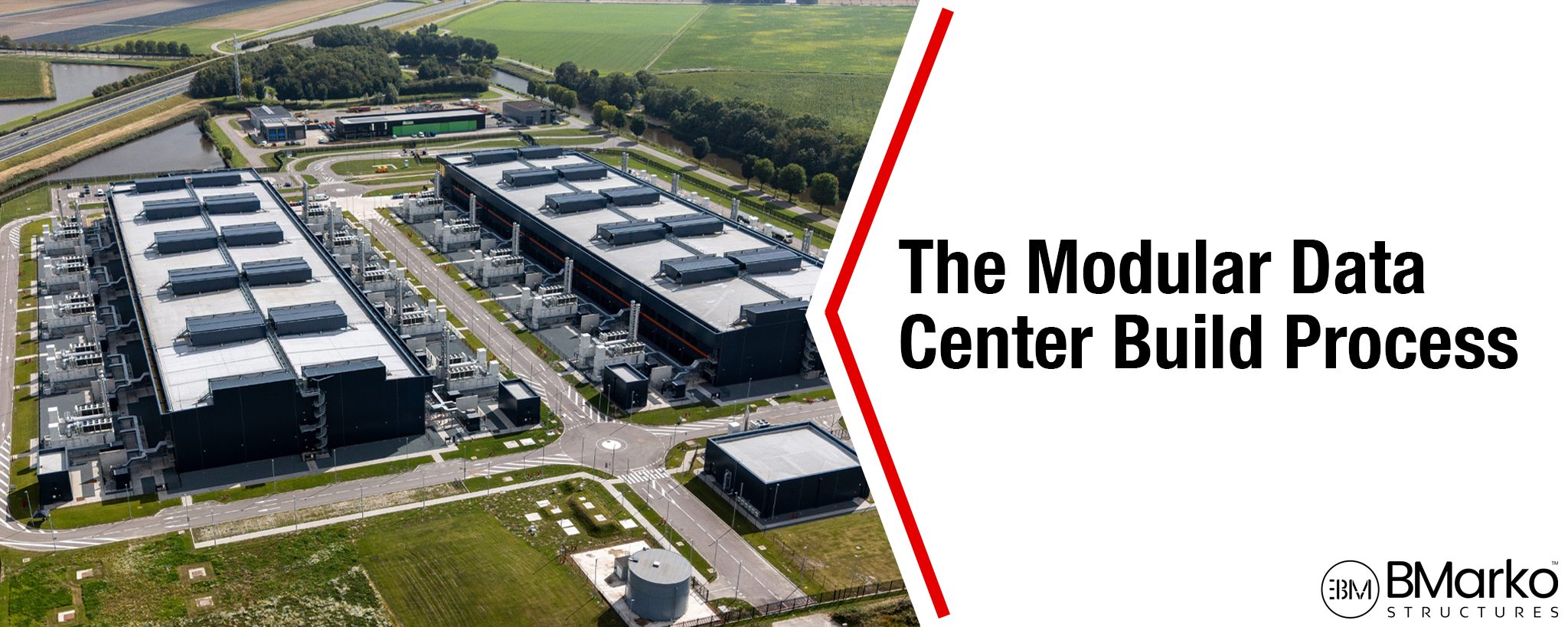
Modular data centers are often described as “faster” or “more flexible,” but those benefits only exist if the build process is done correctly. For many organizations, the biggest hesitation around modular is not performance. It is uncertainty around how everything comes together and whether it will work as reliably as a traditional facility.
Understanding the modular data center build process helps remove that uncertainty. While every project is different, most modular deployments follow a clear, structured path that emphasizes planning, coordination, and quality control long before anything arrives on site.

Step 1: Defining Requirements and Scope
A traditional data center is typically built on site from the ground up. The process includes land development, structural construction, electrical and mechanical installation, and final commissioning. These facilities are often designed as permanent infrastructure with most of the required capacity built upfront.
Traditional data centers work well for organizations with predictable growth, long planning horizons, and the ability to commit significant capital early in the project. They are commonly used for centralized campuses that are expected to operate for decades.
The tradeoff is time and flexibility. Design, permitting, and construction can take a year or more. If demand changes during that window, organizations may find themselves overbuilding or reworking plans before the facility is even operational.
Step 2: Engineering and Design Coordination
Once requirements are defined, engineering and design move forward. In a modular project, this is not handled by a single party. Structural design, power systems, cooling infrastructure, and IT equipment planning all need to align.
BMarko Structures plays a key role at this stage by engineering and building the physical enclosures that house the modular data center. These enclosures are fabricated to support the required equipment, environmental controls, and site conditions.
At the same time, trusted partners and vendors handle power distribution, cooling systems, controls, and IT integration. Coordination between teams is critical to ensure everything fits, functions, and performs as intended once deployed.

Step 3: Factory Fabrication of Modular Components
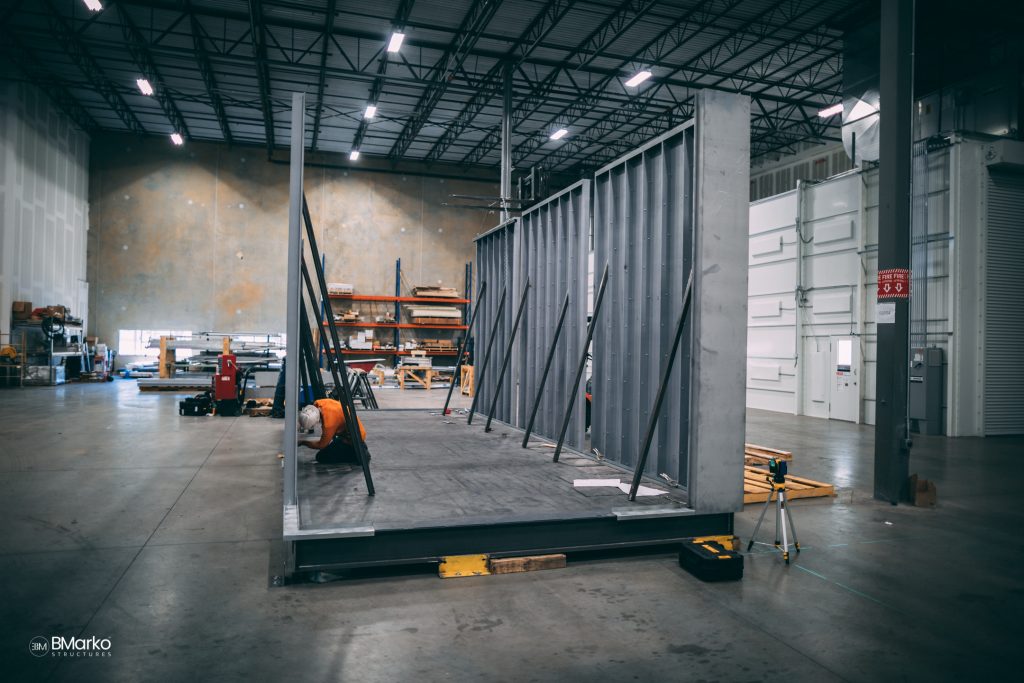
One of the biggest advantages of modular data centers is that much of the construction happens in a controlled factory environment. Enclosures are fabricated off-site, where conditions are predictable and quality control is consistent.
During this phase, structural components are built, integrated, and prepared to receive supporting systems. Factory fabrication reduces delays caused by weather, site access issues, and labor variability. It also allows multiple workstreams to move forward at the same time, rather than sequentially.
For enclosure construction, this environment enables tighter tolerances, repeatable processes, and a higher level of finish compared to most on-site builds.
Step 4: Integration and Pre-Deployment Testing
Before anything is shipped, modular components typically go through inspection and stress testing. Power systems, cooling interfaces, and structural elements are checked to ensure they meet specifications and are ready for deployment.
This step is critical because it removes much of the uncertainty that can come with traditional construction. Issues are identified and resolved before arriving on site, rather than during installation when changes are more costly and disruptive.

Step 5: Site Preparation
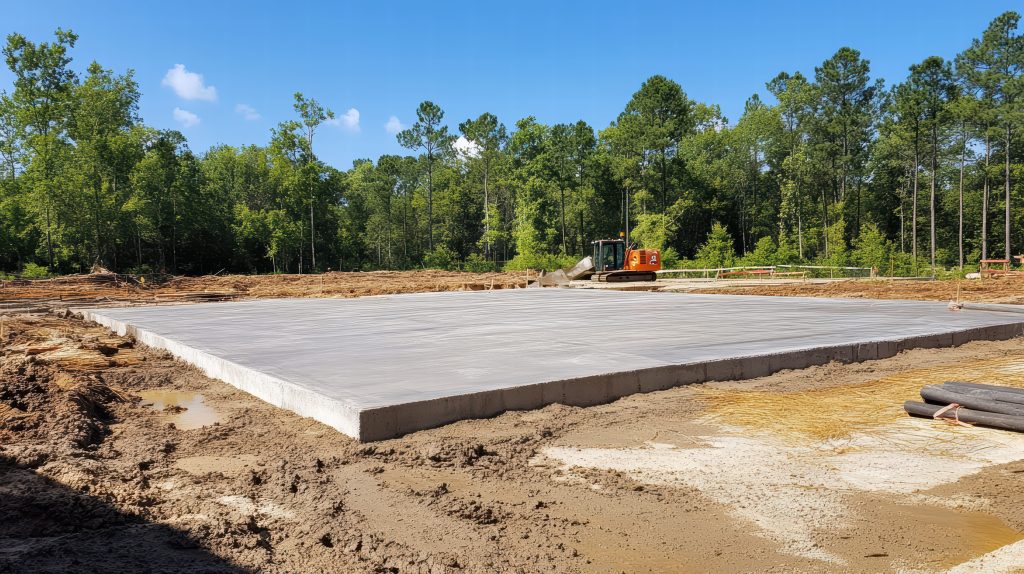
While modules are being built in the factory, site preparation happens in parallel. This can include foundation or pad construction, utility connections, access planning, and permitting.
Step 6: Transportation and On-Site Installation
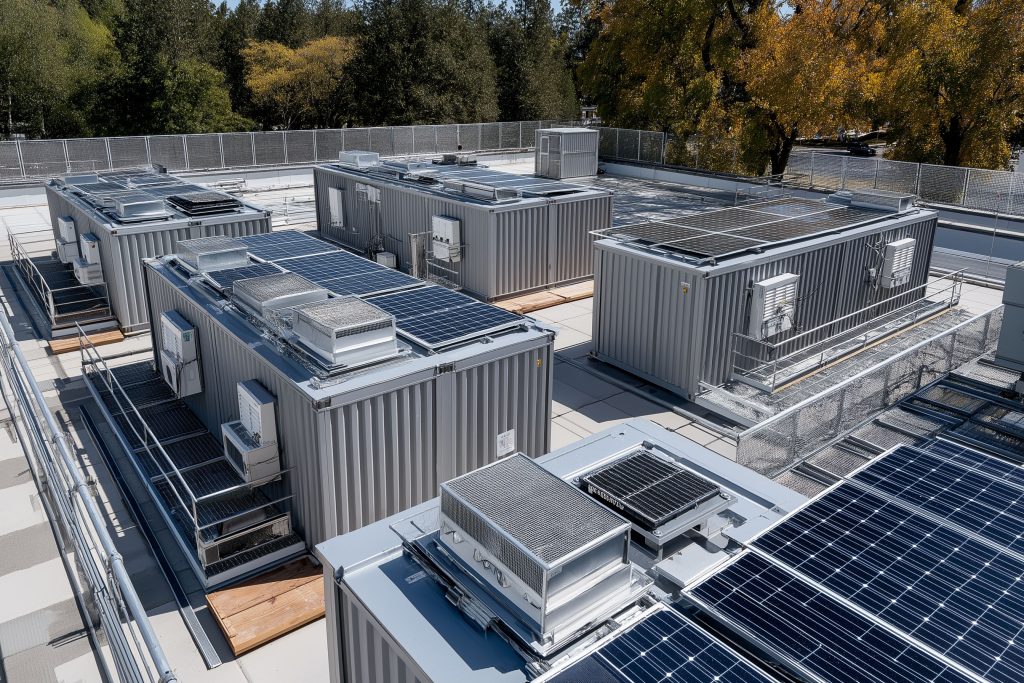
Once modules are complete, they are transported to the site and set in place. Installation typically involves positioning the enclosures, connecting utilities, and integrating power, cooling, and networking systems.
Compared to traditional construction, this phase is significantly shorter. What would normally take months of on-site work can often be completed in weeks, depending on the project scope.

Step 7: Commissioning and Handoff
After installation, the data center goes through final commissioning. Systems are tested together to confirm performance, reliability, and operational readiness.
At this point, the modular data center is ready to support live workloads. Because much of the testing occurred earlier in the process, commissioning is typically more predictable and controlled.
Step 8: Expansion and Adaptation Over Time
One of the defining features of modular data centers is the ability to expand over time. As demand grows, additional modules can be added without disrupting existing operations.
This phased approach allows organizations to align infrastructure investment with real demand rather than forecasts alone. It also provides flexibility to adapt as workloads, technologies, and business needs change.
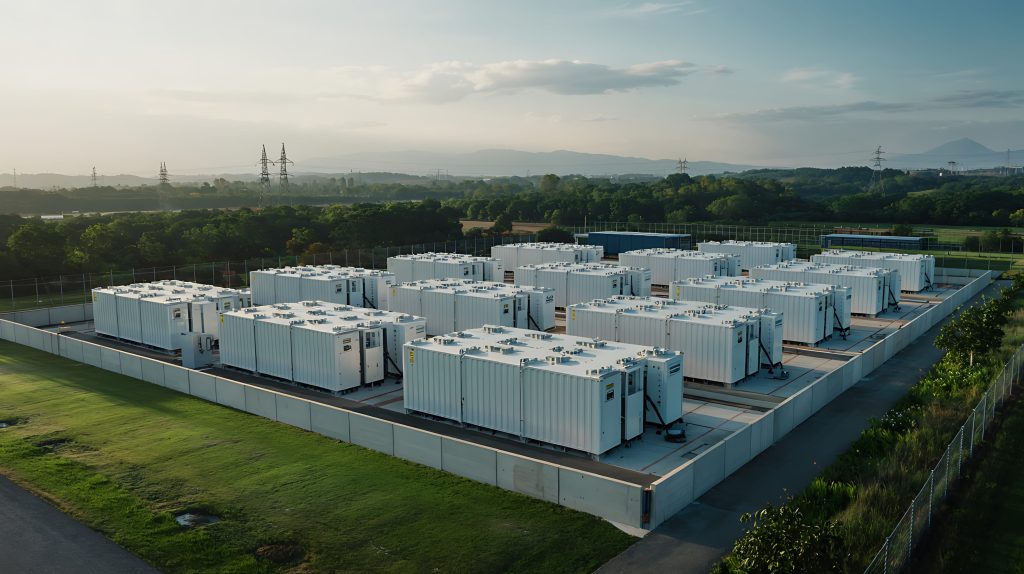
How BMarko Structures Fits Into the Process
BMarko Structures focuses on building the enclosures and structural systems that support modular data center deployments. While we are not full-scale modular data center designers, we work closely with experienced partners and vendors who specialize in power, cooling, and IT infrastructure.
Our role is to ensure the enclosure itself is built to meet the demands of a modern data center environment and integrates seamlessly into the broader system. By collaborating with trusted providers, we help guide projects in the right direction and support a complete, well-coordinated deployment.
Bringing the Process Together
The modular data center build process is not about shortcuts. It is about shifting work into environments where quality, coordination, and timelines can be better controlled.
When planned correctly, modular deployments offer faster delivery, reduced risk, and the flexibility to grow over time. For organizations exploring modular data centers or hybrid approaches, understanding this process is key to making confident, informed decisions.
If you are considering a modular data center and need a structural partner to support the enclosure side of your build and help coordinate with the right vendors, BMarko Structures can help guide the process from early planning through deployment. Get in touch with us today to learn more.
Contact Us
"*" indicates required fields
- 134 Long Rd Suite 200, Williamston, SC 29605
- (678) 666-3688
- [email protected]